Showing posts with label Detroit. Show all posts

Wednesday, May 21, 2014

Lovers rock


The movie opens turning, the night’s stars unstuck and blurring, the 45 of Wanda Jackson’s ‘Funnel of Love’ loping on the turntable, the twin images of our far-apart lovers reclining in their respective nests. For some minutes, everything moves clockwise. (If only the screen were a circle!) It’s an ingenious way of getting us thinking about time in broader terms. It also gets us literally into the groove of Jim Jarmusch’s latest seriocomic cosmic concoction, a blend of genre mischief, thing/place/notion fetish, corny comedic routines, ruminations on time, science, civilization and technology, and the sort of normally neglected incidentals that Jarmusch has always aspired to construct movies from—few filmmakers so clearly enjoy just watching people do stuff: roll a cigarette, dance, play dominoes, select books to travel with. Only Lovers Left Alive is itself a trip, an appropriation of vampire lore as a way to address the nature of long-term love. It’s been done before but, in my experience, never so resonantly and, despite a heavy-handed moment or two—the historical references get a little old—so lightly.


There comes a point in relationships where living apart emerges as a viable option. In the case of Eve (Tilda Swinton) and Adam (Tom Hiddleston) it may have taken a century or two. Only Lovers begins with Eve in Tangier and Adam in Detroit—an undead city if ever there was—where he holes up in a dilapidated house making smoldering anonymous records he may or may not want people to hear. She embraces life and modernity, he’s a recluse despairing at the world’s entropic idiocy, obsessively accumulating objects from the past—though it’s notable that only Eve can carbon-date these objects with a mere touch. Adam’s gloom burgeons to the degree where suicide becomes a consideration. Eve, sensing this—there is some discussion of spooky action at a distance—takes a chain of redeyes to come meet him. But Eve’s arrival is followed by an unexpected visit from her little sister Ava (Mia Wasikowska), also a vampire. For a time the film becomes, of all things, a comedy about annoying in-laws who invade your place, touch your stuff, put the moves on your buddies, and drink all your blood.  


From Down By Law (1986) to Dead Man (1995), Jarmusch’s films have always transmitted ambivalence toward narrative, something he seems to regard largely as scaffolding through which he can weave digressions. Only Lovers has just about the friendliest balance of story and incident in any of his later, woozier, formally looser works. Ava’s tempestuous entrance and an eventual crisis involving dwindling blood supplies give the film enough midpoint momentum to support its loveliest, less urgent passages, the White Hills concert, or a wee-hour tour of the Motor City, complete with a visit to Jack White’s house and the Michigan Theatre, a movie palace-turned parking lot, on the site where Henry Ford built the first car. (The building recently featured in Peter Mettler’s The End of Time.)


What else? The revenant fashions are to die for, the angular drones of Jozef Van Wissem score drape scenery in aural smoke, and the typically eclectic cast, which also includes Anton Yelchin, Jeffrey Wright and John Hurt, accentuate the film’s supple tonal shifts. Eve is the anchor in the central relationship, but Hiddleston is the anchor in the cast, embodying both the gravity and mirth generated by this film made by a mature artist who, I’d guess, is reflecting on his own experiences negotiating love over the long term. Only Lovers is, in a sense, about the special pleasures of revisiting what’s known: books, records, friends, lovers. Or the work of beloved irreverent filmmakers who endeavour over time to keep finding new routes to explore, while adhering to certain old ideas about what their art should be, regardless of changing fashions. 
                                                  

Wednesday, February 6, 2013

"Right now, right here, in front of me. This moment." A conversation with Peter Mettler


Cinema is the assembly of captured moments, the repurposing of the past in fragments, what Andrei Tarkovsky called sculpting in time. Swiss-Canadian filmmaker Peter Mettler’s latest takes this most essential of cinema’s raw materials, this definitive dimension of existence and identity, and claims it as its central subject. The End of Time is both a hypnogogic object of meditation and a spectacular, absorbing thematic exploration, riddled with fascinating characters and seemingly fantastical locales. It is a question machine: What is time? An illusion? Some false ordering we impose upon the passage of instants? Does its passage change depending on how we spend it? Is it really just space? Does it even exist?


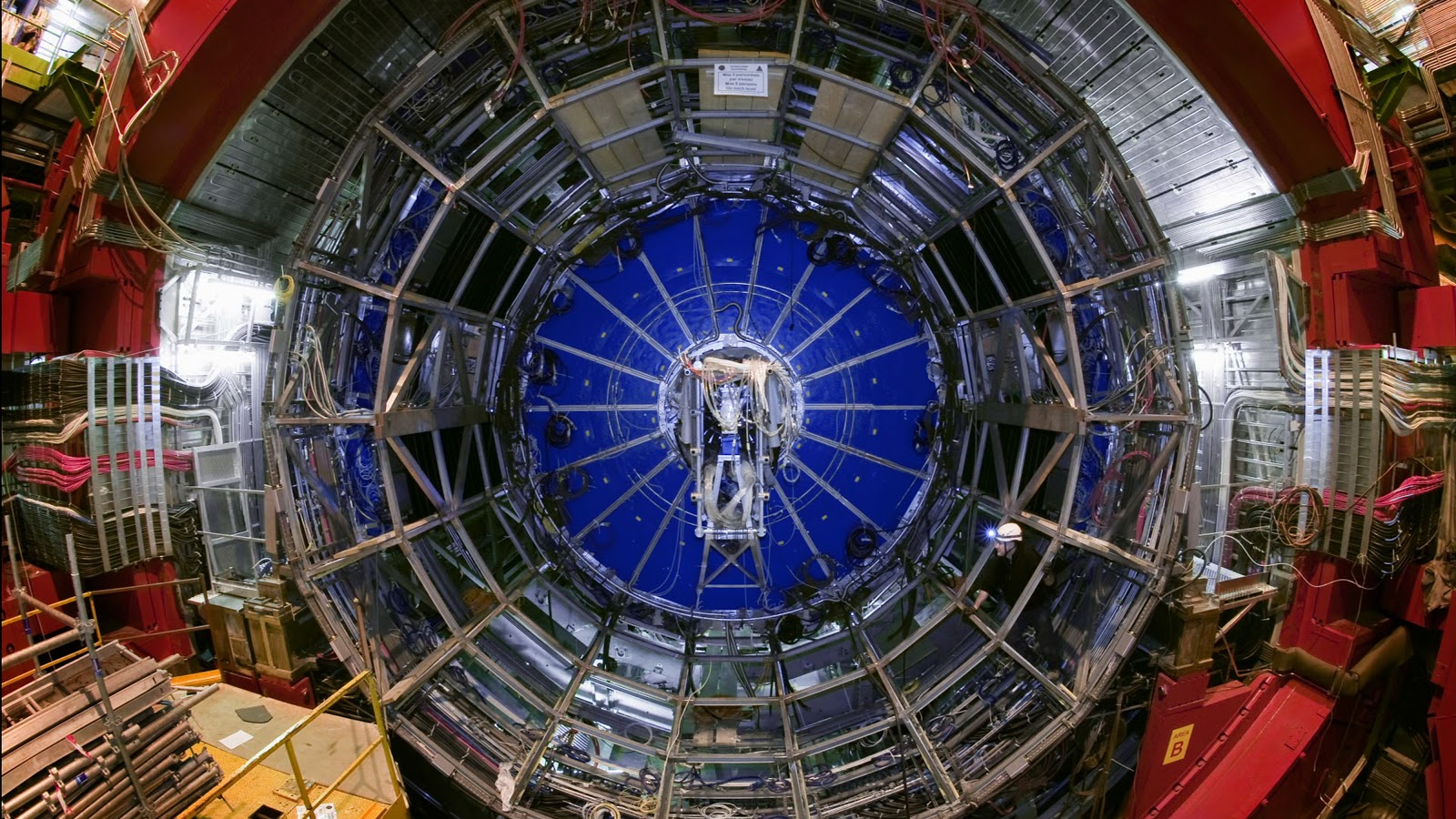
Seeking answers—or, as it turns out, deepening mysteries—The End of Time takes us to the European Organization of Nuclear Research, or CERN, where physicists recreate the Big Bang in the massive Hadron Collider particle accelerator; to Hawaii, where a man named Jack Thompson knowingly lives within the annihilating lava path of an active volcano; to Detroit, where the ravages of time can be read in nature’s reclaiming of the crumbling vestiges of civilization; to India, where religious ritual promises escape from time’s enslavement; to Mettler’s editing suite, where time is manipulated to tell stories; to some liminal space made of hypnotic geometries and flickering images generated by Mettler’s own image-mixing software. Film as journey: we feel we’ve been taken far away, bedazzled, perplexed, enlightened, and safely returned, all in under two hours. 


The End of Time follows the modus operandi of Mettler’s other extraordinary first-person travelogues: Eastern Avenue (1985), Picture of Light (1994), in which Mettler goes to Churchill to film the Northern Lights, Balifilm (1997), Gambling, Gods & LSD (2003), in which Mettler travels to Switzerland, the American Southwest and India to meet people seeking transcendence through diverse means, and Petropolis: Aerial Perspectives on the Alberta Tar Sands (2009), in which Mettler gets in a helicopter and surveys the draining of bitumen from the boreal forest, the unwitting creation of a sinister kind of land art, and landscapes that feel like homages to Antonioni’s Red Desert (1964), at first spectrally beautiful, then horrifying when you realize this isn’t some alien planet but our own province. Some have regarded The End of Time as a conclusion of this cycle, but I get the impression that Mettler’s approach isn’t something devised for any particular project; it is a way of moving, looking, listening, being, an activity that just happens to result in some of the most important films this country has produced in the last 30 years.

I spoke with Mettler last year, when The End of Time was premiering at the Toronto International Film Festival. 

Peter Mettler 

JB: When you’re in the act of shooting, does time stop? Or do you feel more sensitive to time’s passage when the camera’s running?

Peter Mettler: I think what happens when I’m shooting is that time disappears. It’s one of the occasions where I feel most present. You’re aware of being caught in time’s flow, which you’re always in, but now you’ve added this layer of recording. You’re creating time, in a way, creating a time experience for somebody. Ironically, that makes me feel present. I’m certainly not thinking about time. It’s more about when to turn the camera on and off and when to move it. It’s more about body reactions than intellectual reactions.


JB: It seems there was a point in film history when all movies became, in some sense, about time, capturing pieces of time. They became self-conscious. So it’s as though you’ve taken this hidden subject of all movies and dragged it to the foreground.

PM: I wasn’t aware of that so much. It was only by making the film that this became apparent, how you point a camera at anything and you’re addressing time itself. But I didn’t initially set out to make a film about time; the original subject was clouds, what goes into them, the vapours and where they come from, how they travel, how they return to the ground or the ocean. My intention was to follow those cycles in a very literal way. Petropolis came out of that, because the tar sands is a particularly toxic place that was adding all this junk into our clouds. By chance, Greenpeace contacted me to do something for them and that project spun off into its own thing. Nonetheless, by studying clouds I started thinking about time. If you recall, a physicist in the film talks about how in some languages weather and time are the same word. So I became more aware of transition, transformation, those occurrences which are what we call time. Then it was a matter of questioning what this thing we call time really is.


JB: There are mesmerizing passages in The End of Time in which you allow a lot of time to simply pass before the camera, the part with the lava fields being an especially memorable one. As you were figuring out what this project was, was it ever going to be just that? Just lava, say? Just allowing time to speak for itself before the camera?

PM: I could easily see myself just making a film about lava. Not even about lava—just watching lava. [Laughs] Lava for 90 minutes! We’ve done this, just watched lava footage for that length of time in the editing room. It’s intoxicating, really interesting where your mind goes. But here we are, living in this particular time and use of media. So how do you present ideas? What’s the format? We chose the feature film format and the documentary genre; you can’t show a 90-minute lava film in that context. The rationale involves who you’re communicating with, using familiar aspects of cinematic language while simultaneously trying to lead the viewer to look at things a little differently. That lava sequence is quite long for a traditional film. I think it’s about six minutes.


JB: Numerous elements in the film break from documentary conventions. When you introduce commentators, for example, there are no supers telling us who they are, and many of their comments are abbreviated.

PM: One thing I’m trying not to do is to make a film that’s just informational, you know? One that’s didactic or that uses words to illustrate ideas. I’m much more interested in taking the viewer through an experience, to form their own ideas and associations. Often when we see a label telling us this is such a place or this is this person’s name. It rarely matters, actually.

JB: That’s true. You almost never remember.

PM: I’m trying to make you feel and see and wander and not be distracted by that stuff. I know this is a challenge, because you want to know where you are. But I believe it’s better for my ends to be provocative in that way.

JB: Is there any correlation between the sequence of the film’s sections and the order in which you were discovering these things, going to these places?

PM: Funny you should ask, because Gambling, Gods & LSD was chronological. That was one of the rules in the edit of that film. I really wanted to respect the logic and the mystery of how experience unfolds, how one thing leads to another. With this film that was not the case. In fact a lot of the film had already been edited by the time we were shooting in India. So it was more constructed. But I think that logic of experience was still an influence in how we were cutting.


JB: Movies so often feel very digested by the time you see the final cut. It’s exciting to watch a film where you can sense questions being asked in the midst of its making.

PM: Absolutely. I don’t know where I’m going. Which is kind of terrifying in some respects, but you have to have faith that things will find themselves. It happens that way in evolution, so why not in a creative process?


JB: Having visited CERN and met with people who do a lot of thinking about the physics of time, do you feel more enlightened? Or did this research just compound the mystery?

PM: It was inspiring to see what they were doing at CERN. I’d always imagined physics as more defined, but talking to these people I got the impression that everything is very theoretical, philosophical, in some ways similar to the pursuit I’m on with my cinema, with observing. They call it “basic research” when they don’t know where they’re going. I really became fond of that term. If you apply it to our cinematic process of exploration, you know you’re going to end up with something, but you don’t know what it is. That openness allows you to discover new things.


JB: Do you feel like making this film has altered your sense of time’s passage?

PM: What it’s done is made me appreciate transformation more deeply. Watching clouds or something else in nature, it’s just made me more appreciate of being able to be with whatever is happening right now, right here, in front of me. This moment.
    

Wednesday, March 2, 2011

Atrocity Exposition: Winter Soldier


He can’t remember how many times he’d seen prisoners bound and blindfolded with copper wire and thrown from mobile US aircraft, but Rusty Sachs, 27 year-old veteran of the US Marine Air Wing, thinks it must have been somewhere between 15 and 50. Sachs describes this activity, performed in the spirit of competition (the prisoners were being tossed from choppers not only for sadistic amusement or some perverse notion of efficiency, but to see who could throw theirs the furthest), in the opening moments of
Winter Solider (1972). This documentary, chronicling the Winter Solider Investigation, which took place during the winter of 1971 in a Detroit Howard Johnson, wisely gets right down to business. Nothing that’s discussed over the course of the film’s 96-minute running time is for the faint of heart or anyone nurturing illusions about Americans in Vietnam. Winter Solider, along with Hearts and Minds, is one of the essential films about Vietnam, and as such is utterly devastating.


The film was produced by the Winterfilm Collective, which included Sachs, documentarian David Grubin, and Barbara Kopple, who would go on to make Harlan County, USA (76), another of the greatest, most valiant nonfiction films of the era. But the decision to attribute Winter Soldier to a collective rather than a single filmmaker or even handful of filmmakers is appropriate. Few films seem as necessarily subservient to simply assembling participants for the purpose of condensing and conveying vital information. What sensibility emerges feels very much the product of likeminded activists whose private ambitions are secondary to the event unfolding before the cameras. Solidarity is woven into the film’s core. All we get, interspersed with footage from the war, are testimonies, both formal (speakers on stage, with a microphone, before a small public) and informal (veterans and citizens comparing notes during breaks in the hearings). Among those veterans who speak out against the war is future Presidential candidate John Kerry. The images, particularly the long, unbroken close-ups, are somewhat overexposed, with lots of hot white in the Caucasian faces, the details blasted from the background, nothing to distract from what’s being said and how, all of it very wintry indeed.


What’s discussed? The list of atrocities could consume the span of this review and some. Torture, rape, mutilation, humiliation, disembowelment, destruction of property. The slaughter of children. The regarding of all Vietnamese as the enemy, especially once they’re dead. Wildly inflated body counts. Nightmares. Patriotism. Racism, perhaps as a bottom line that goes so much deeper into history and the social fabric than the then-current conflict. Soft-spoken and handsome in his dark beard, Scott Camil, who was discharged after having received 13 medals and attained the rank of Sergeant, recalls going to Vietnam to find out what kind of a man he was. Even after witnessing countless flamboyant violations of the Geneva Convention, Camil still believed he was doing what was right for his country. Beyond the atrocities committed, beyond policy, beyond whatever we can regard as history or as an ongoing, fundamental concern about government and war,
Winter Solider haunts us with the question of how it is Scott Camil became what he became for the four years he served. At least we know that whatever he became, he could somehow, eventually, come back from it, and tell his story.

Winter Soldier screens this weekend at Edmonton's Metro Cinema.

Monday, January 5, 2009

The war at home: Gran Torino


Gran Torino can be read as a sort of western, and not just because of the immense presence of its iconic director and star. Maybe Walt Kowalski (Clint Eastwood) is an old soldier looking for a new war. He served in Korea, worked most of his life at a Ford plant, raised kids who are now middle class twerps and virtually estranged. He’s newly widowed, but continues to live alone, save his pooch, in the family house in some corroded suburb in the industrial wasteland of Detroit, where he mows the lawn, does small repairs, sucks back can after can of Pabst Blue Ribbon on the porch, and works hard to keep others away, sometimes with a snarl and a growl, sometimes with a gun. Always with a string of racist slurs.

But Gran Torino, written by Nick Schenk, is among other things the story of Walt’s redemption. Thanks partly to the awkward machinations of the script, but thanks to a greater degree to Eastwood’s particular integrity, this redemption will not come easily. Walt’s encounters with his Hmong immigrant neighbours, the kids especially, will force him to bust his cloistered existence. Teenage siblings Sue (Ahney Her, who tends to swallow her words but is so utterly the character) and Thao (Bee Vang) engage Walt, the former through smart talk, a preternatural insight into curmudgeonly psychology and offerings of delicious Hmong chow, the latter by trying to steal Walt’s prized Gran Torino under pressure from his gangbanger cousins. Walt finds new purpose as Sue and Thao’s protector and will ultimately stop at nothing to ensure they get a fighting chance to wriggle free of the ghetto. He’s an old hand at intimidation, so why should some stupid punks with tattoos and guns worry him? I can’t claim that I buy how it all goes down, but that doesn’t meant it’s not a story worth telling.


Eastwood manipulates his star image brilliantly. He knows the audience sees Dirty Harry up there, that we associate him with vengeance and vigilantism, and he lets all these extra-filmic elements hover around him and feed the tension. Though his directorial work can sometimes slip into implausibility and half-baked sentiment, Eastwood likes his stories tough. And he’s that rare mainstream American filmmaker who tries to make movies about what it means to live in America today. This alone is a reason to if not treasure at least respect his body of work. Rather than mindlessly celebrate his country’s puffed-up triumphalism, Gran Torino surveys a corner of the US that resembles a third world shit hole more than some glorious embodiment of ambition and affluence.

Whatever promise of a better world can be gleaned in Gran Torino must be found in the margins, in the implication that even the least tolerant of us, the disdainful dinosaurs who cling to antiquated notions of masculinity and tribalism, might be lured back into active engagement with others. The film trades in cliché. It cheats here and there to get Walt to the finish line. But Walt himself, which is to say Eastwood the conservative closet humanist, is never less than riveting, and it’s the throwaway moments he shares with his unexpected new friends that are the film’s finest and most affecting. There might just be hope for my cranky old uncle Rick yet. I just hope the movie plays in Gananoque, Ontario, so he can see it.