Showing posts with label essay. Show all posts

Monday, December 30, 2013

2013: The year in books


Roni Horn, No title, 1999

I ended 2013 the same way I end every year: all-too aware of just how many worthy new books I still haven’t read. (The Pynchon rabbit hole remains unfinished.) But this deficit in no way prevents me from compiling a quintet of stellar titles for this, my personal list of the best books of the year. Which just happens to contain one novel, one essay, one story collection, one work of investigative journalism and one reissue of a long out-of-print classic. Whatever traits my five best is missing, it appears that diversity of literary form isn’t among them.


The Flamethrowers
Rachel Kushner’s wildly ambitious second novel opens with a man getting brained by a headlamp on a World War I battlefield before describing a young woman’s journey to Utah to participate in the land-speed trials on the Bonneville Salt Flats. The Flamethrowers is set mainly in the 1970s and mainly in New York, with that young woman diving headlong into a world of high art and motorcycles and weird modelling gigs and becoming the lover of a much older man with a precarious familial legacy, but it also unfolds in various moments throughout the preceding decades in other countries and with other characters. The connections are tenuous and compelling. Much rubber is burned, but nothing happens in a hurry. Kushner is a restless storyteller and her heroine’s process of self-actualization, accelerated by her gift for association and love of sheer velocity, create opportunities to connect stories from all over space and time.


The Faraway Nearby
A hybrid of history, autobiography, cultural criticism and philosophical essay, Rebecca Solnit’s The Faraway Nearby, a companion of sorts to A Field Guide to Getting Lost (a personal all-tiem favourite) speaks in a singular voice yet is about so many things. Mysterious illnesses and aging parents, explorers and revolutionaries, Frankenstein and U.S. foreign policy, volcanoes, ice, art (especially Roni Horn's water works; see above image): what ultimately weaves such disparate subjects together is Solnit’s fierce curiosity, her interest in the nature of storytelling, her wide-open heart, her loneliness (perhaps), and her persuasive conviction that those who evade self-knowledge are dangerous and doomed.  


Tenth of December
It's true: George Saunders possesses some weird kind of genius. His stories frequently incorporate brilliant science fiction propositions without ever reading like sci-fi. He uses first-person narration to acknowledge the pathos and ridiculousness of most of our inner lives—he is one of the funniest writers of vernacular and modern anxiety working in English—while generating tremendous empathy for his flawed, familiar protagonists. Tenth of December is among his finest collections. Sample ‘The Semplica Girl Diaries’ for a strong taste of his incisive, entropic, goofy, precise, quietly politicized, ultimately humanist prose.


Going Clear: Scientology, Hollywood, and the Prison of Belief
Pulitzer Prize-winning journalist Lawrence Wright (The Looming Tower: Al-Qaeda and the Road to 9/11) hurled himself into the hoary task of trying to chronicle both L. Ron Hubbard’s heavily shrouded, utterly bizarre, alternately bumbling and impossibly triumphant life and his troubled legacy—a task which found Wright’s efforts continually derailed by Hubbard’s infamously litigious Church of Scientology, whose bullying no doubt prompted Random House Canada’s refusal to publish the book. (I ordered my copy from the U.S.) Even with footnotes on every other page reminding us that the Church denies anything that might be remotely slanderous (a typical paragraph ends with a guy running around a pole in the desert every day until his teeth fall out, or an old lady being thrown into the sea), Going Clear is an appalling, insightful and endlessly fascinating read, an essential text on the distinctly American hunger for self-made religion and the pivotal role that celebrity, money and myth-making play in feeding it. 


Speedboat
Lastly, a new old book. For years I knew Renata Adler’s 1976 debut novel only by reputation—it’s one of these books that amazing writers are routinely amazed by. NYRB Classics’ resurrection of Speedboat was thus a major event. But what is Speedboat? First-person, and very personal (autobiographical?), yet distracted always by culture as some colossal force. (DeLillo fans take note.) Fragmentary confessions slip out of assessments of politics, movements and events. The prose is dazzling and hard-edged as diamonds, but doomy and funny too, like aphorisms that lead only to punch-lines. Every sentence thrills—it’s kind of exhausting! It’s everything I hoped it would be and impossible to describe in a paragraph. Please read.  
                

Wednesday, February 6, 2013

"Right now, right here, in front of me. This moment." A conversation with Peter Mettler


Cinema is the assembly of captured moments, the repurposing of the past in fragments, what Andrei Tarkovsky called sculpting in time. Swiss-Canadian filmmaker Peter Mettler’s latest takes this most essential of cinema’s raw materials, this definitive dimension of existence and identity, and claims it as its central subject. The End of Time is both a hypnogogic object of meditation and a spectacular, absorbing thematic exploration, riddled with fascinating characters and seemingly fantastical locales. It is a question machine: What is time? An illusion? Some false ordering we impose upon the passage of instants? Does its passage change depending on how we spend it? Is it really just space? Does it even exist?


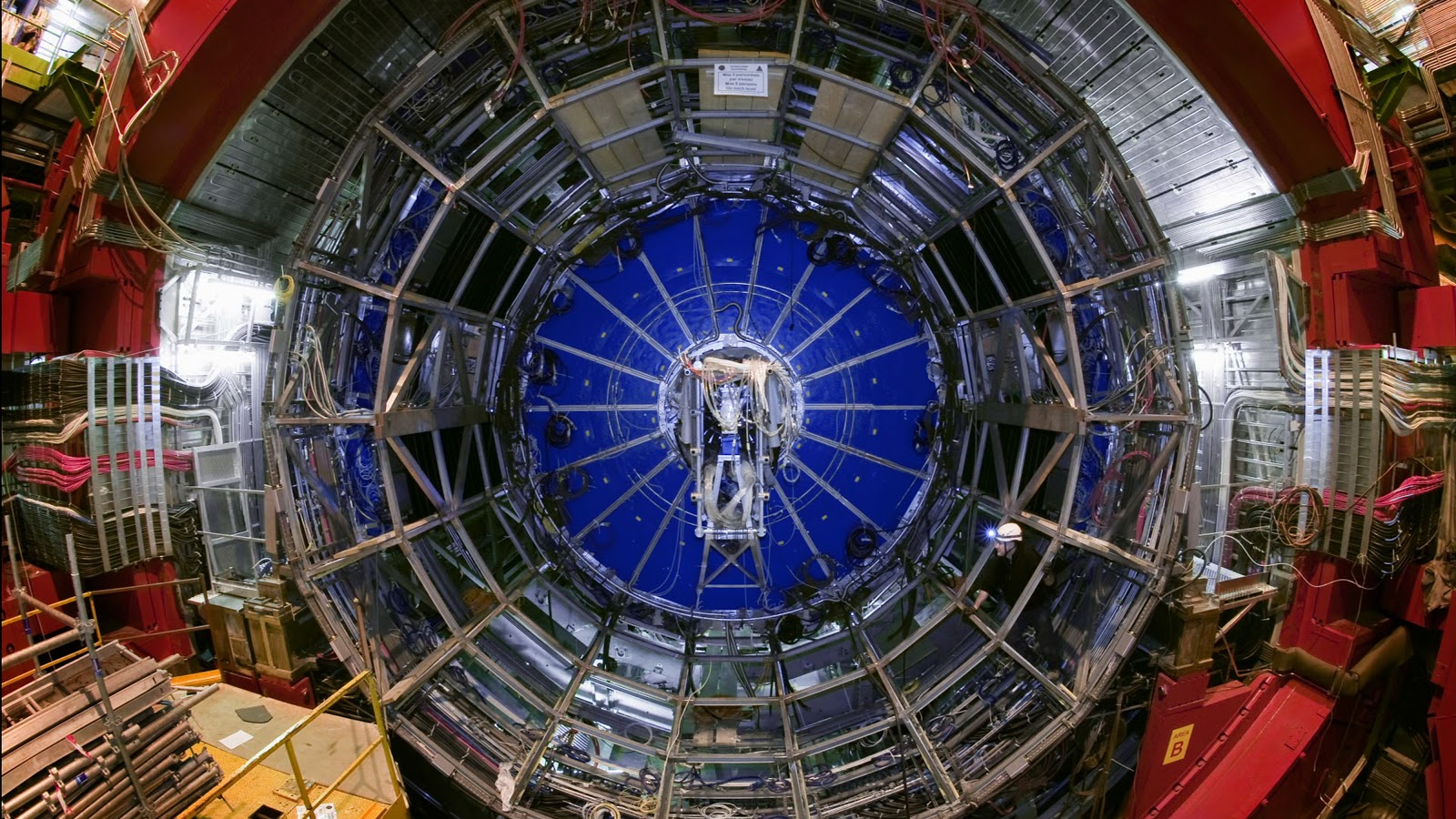
Seeking answers—or, as it turns out, deepening mysteries—The End of Time takes us to the European Organization of Nuclear Research, or CERN, where physicists recreate the Big Bang in the massive Hadron Collider particle accelerator; to Hawaii, where a man named Jack Thompson knowingly lives within the annihilating lava path of an active volcano; to Detroit, where the ravages of time can be read in nature’s reclaiming of the crumbling vestiges of civilization; to India, where religious ritual promises escape from time’s enslavement; to Mettler’s editing suite, where time is manipulated to tell stories; to some liminal space made of hypnotic geometries and flickering images generated by Mettler’s own image-mixing software. Film as journey: we feel we’ve been taken far away, bedazzled, perplexed, enlightened, and safely returned, all in under two hours. 


The End of Time follows the modus operandi of Mettler’s other extraordinary first-person travelogues: Eastern Avenue (1985), Picture of Light (1994), in which Mettler goes to Churchill to film the Northern Lights, Balifilm (1997), Gambling, Gods & LSD (2003), in which Mettler travels to Switzerland, the American Southwest and India to meet people seeking transcendence through diverse means, and Petropolis: Aerial Perspectives on the Alberta Tar Sands (2009), in which Mettler gets in a helicopter and surveys the draining of bitumen from the boreal forest, the unwitting creation of a sinister kind of land art, and landscapes that feel like homages to Antonioni’s Red Desert (1964), at first spectrally beautiful, then horrifying when you realize this isn’t some alien planet but our own province. Some have regarded The End of Time as a conclusion of this cycle, but I get the impression that Mettler’s approach isn’t something devised for any particular project; it is a way of moving, looking, listening, being, an activity that just happens to result in some of the most important films this country has produced in the last 30 years.

I spoke with Mettler last year, when The End of Time was premiering at the Toronto International Film Festival. 

Peter Mettler 

JB: When you’re in the act of shooting, does time stop? Or do you feel more sensitive to time’s passage when the camera’s running?

Peter Mettler: I think what happens when I’m shooting is that time disappears. It’s one of the occasions where I feel most present. You’re aware of being caught in time’s flow, which you’re always in, but now you’ve added this layer of recording. You’re creating time, in a way, creating a time experience for somebody. Ironically, that makes me feel present. I’m certainly not thinking about time. It’s more about when to turn the camera on and off and when to move it. It’s more about body reactions than intellectual reactions.


JB: It seems there was a point in film history when all movies became, in some sense, about time, capturing pieces of time. They became self-conscious. So it’s as though you’ve taken this hidden subject of all movies and dragged it to the foreground.

PM: I wasn’t aware of that so much. It was only by making the film that this became apparent, how you point a camera at anything and you’re addressing time itself. But I didn’t initially set out to make a film about time; the original subject was clouds, what goes into them, the vapours and where they come from, how they travel, how they return to the ground or the ocean. My intention was to follow those cycles in a very literal way. Petropolis came out of that, because the tar sands is a particularly toxic place that was adding all this junk into our clouds. By chance, Greenpeace contacted me to do something for them and that project spun off into its own thing. Nonetheless, by studying clouds I started thinking about time. If you recall, a physicist in the film talks about how in some languages weather and time are the same word. So I became more aware of transition, transformation, those occurrences which are what we call time. Then it was a matter of questioning what this thing we call time really is.


JB: There are mesmerizing passages in The End of Time in which you allow a lot of time to simply pass before the camera, the part with the lava fields being an especially memorable one. As you were figuring out what this project was, was it ever going to be just that? Just lava, say? Just allowing time to speak for itself before the camera?

PM: I could easily see myself just making a film about lava. Not even about lava—just watching lava. [Laughs] Lava for 90 minutes! We’ve done this, just watched lava footage for that length of time in the editing room. It’s intoxicating, really interesting where your mind goes. But here we are, living in this particular time and use of media. So how do you present ideas? What’s the format? We chose the feature film format and the documentary genre; you can’t show a 90-minute lava film in that context. The rationale involves who you’re communicating with, using familiar aspects of cinematic language while simultaneously trying to lead the viewer to look at things a little differently. That lava sequence is quite long for a traditional film. I think it’s about six minutes.


JB: Numerous elements in the film break from documentary conventions. When you introduce commentators, for example, there are no supers telling us who they are, and many of their comments are abbreviated.

PM: One thing I’m trying not to do is to make a film that’s just informational, you know? One that’s didactic or that uses words to illustrate ideas. I’m much more interested in taking the viewer through an experience, to form their own ideas and associations. Often when we see a label telling us this is such a place or this is this person’s name. It rarely matters, actually.

JB: That’s true. You almost never remember.

PM: I’m trying to make you feel and see and wander and not be distracted by that stuff. I know this is a challenge, because you want to know where you are. But I believe it’s better for my ends to be provocative in that way.

JB: Is there any correlation between the sequence of the film’s sections and the order in which you were discovering these things, going to these places?

PM: Funny you should ask, because Gambling, Gods & LSD was chronological. That was one of the rules in the edit of that film. I really wanted to respect the logic and the mystery of how experience unfolds, how one thing leads to another. With this film that was not the case. In fact a lot of the film had already been edited by the time we were shooting in India. So it was more constructed. But I think that logic of experience was still an influence in how we were cutting.


JB: Movies so often feel very digested by the time you see the final cut. It’s exciting to watch a film where you can sense questions being asked in the midst of its making.

PM: Absolutely. I don’t know where I’m going. Which is kind of terrifying in some respects, but you have to have faith that things will find themselves. It happens that way in evolution, so why not in a creative process?


JB: Having visited CERN and met with people who do a lot of thinking about the physics of time, do you feel more enlightened? Or did this research just compound the mystery?

PM: It was inspiring to see what they were doing at CERN. I’d always imagined physics as more defined, but talking to these people I got the impression that everything is very theoretical, philosophical, in some ways similar to the pursuit I’m on with my cinema, with observing. They call it “basic research” when they don’t know where they’re going. I really became fond of that term. If you apply it to our cinematic process of exploration, you know you’re going to end up with something, but you don’t know what it is. That openness allows you to discover new things.


JB: Do you feel like making this film has altered your sense of time’s passage?

PM: What it’s done is made me appreciate transformation more deeply. Watching clouds or something else in nature, it’s just made me more appreciate of being able to be with whatever is happening right now, right here, in front of me. This moment.
    

Tuesday, November 27, 2012

Stories within stories


This is the story of a woman who couldn’t quite cope with the demands of a marriage that never brought her joy so much as stasis, who took a chance on a spell of fulfilled desire in another city, who returned from that city and out from under that spell with irrefutable evidence of her indiscretion, who opted to remain in that not very joyous marriage and to keep that irrefutable evidence and incorporate it into the story of her family. This is the story of a girl who was loved but whose mother died when the girl was far too young, who was told certain things over the years in jest and began to wonder when exactly jest becomes so insistent as to resemble truth. This is the story of a woman who was lovable but hard to love with, who had a loud laugh, who spoke a lot on the phone and worried over things, who really wanted to be an actor but mostly settled for being a casting director, a mother, and a problematic wife, who died far too young and became an enigma for everyone she left behind. This is the story of a young actress and political activist who became an extraordinary film director, who wanted to make a terribly thoughtful essay film about the vagaries of memory and how stories shape identity, who thought she could regard her subject from layers of distance and abstraction but slowly came to realize that her essay was a kind of memoir, that the thesis was blushingly personal, that however broadly she populated these Stories she was telling with colorful characters from her family and beyond, the film was always bound to become about her. Stories We Tell is many stories, but like any story it’s also about the storyteller. It cannot be otherwise.


Sarah Polley’s third feature as director, which has been called a documentary for lack of a better term, feels like the culmination of her preceding films, Away From Her and Take This Waltz, in that those films used fiction as a way of thinking about domesticity, intimacy and betrayal between fascinating women and loyal, sturdy men. It was sparked by Polley’s longtime suspicion that her father was not really her father, that is, her biological father, that her mother, who died 20 years ago, conceived Polley with some other man while working on a play in Montréal (the family lived in Toronto). Stories We Tell combines interviews with family and friends of the family—all of them providing different, conflicting speculations or supposed certainties about who was Father X—with sometimes startling home movie footage, an investigation, a formal reading by the father who raised Polley, a great orator with a rigorous emotional poker-face, and other, trickier elements that needn’t be described here. It’s rich, suspenseful, funny, smart, and heartbreaking. It keeps changing its mind about what it is as it goes along, yet it never looses the thread of its search. At one point Polley’s brother quotes Neruda: “Love is so short/Forgetting so long.” That about sums it up. And this film imaginatively sums up something about love and forgetting that Polley’s been getting at for a while. Which makes it that much more thrilling to consider where she goes from here.